No items found.
Thesis: Improving Human Experience With the 5 Senses
Thesis
Translating Psychological Theory into Practical Tools
There has always been an inherent missing link between the theory of designing for human emotion and the actual practice of doing it. Architects understand that a space should evoke a specific feeling, tapping into memories and all five senses, but they lacked a practical methodology to execute it. My Master’s thesis was conceived to solve this exact problem. I developed "Phenomenal Bearings"—a comprehensive framework and 50-page toolkit designed to help creators consciously and systematically design for multisensory outcomes. In the world of UX research, this is exactly what I do today: I take abstract human behaviors, emotions, and qualitative data, and synthesize them into concrete, actionable design heuristics that product and engineering teams can actually build from.
Validating the Experience through Prototyping
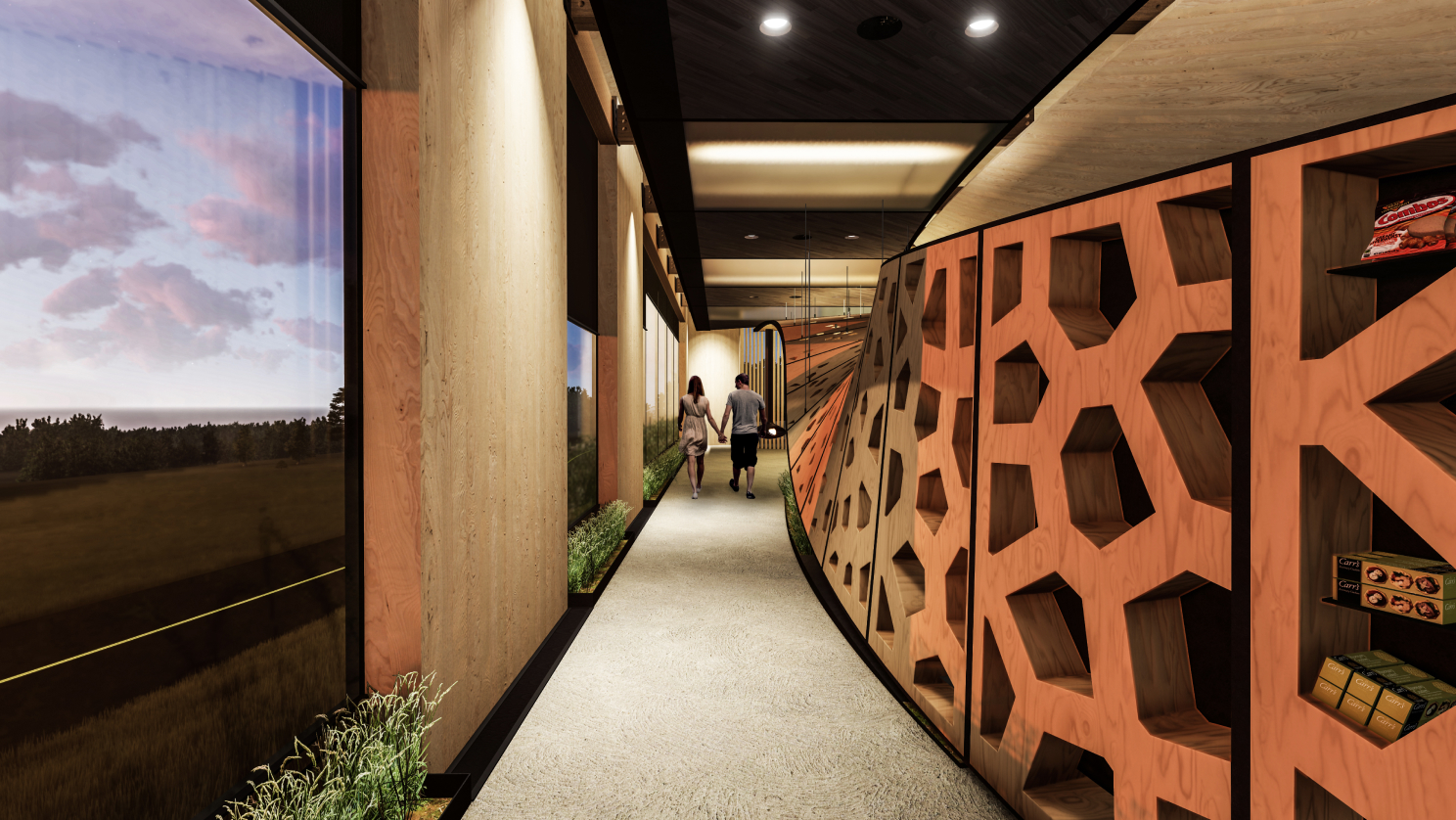
A design framework is only useful if it can be proven to work. To validate the methodology, I didn't just write about it; I rigorously tested it by designing a theoretical "multisensory gas station." I built a fully parametric 3D model of the space driven by Grasshopper algorithms, and then translated that environment into a full-scale Virtual Reality experience. This allowed me to immerse users in the design and validate the emotional and sensory hypotheses of my framework in real-time. Winning two 'Best Thesis' awards from my graduating class reinforced a core belief that still drives my product work today: the most successful designs occur when you use advanced technical systems to prototype, test, and elevate the deeply human experience.