No items found.
Genetic Innovation: Designing a DNA Inspired Staircase
Architecture
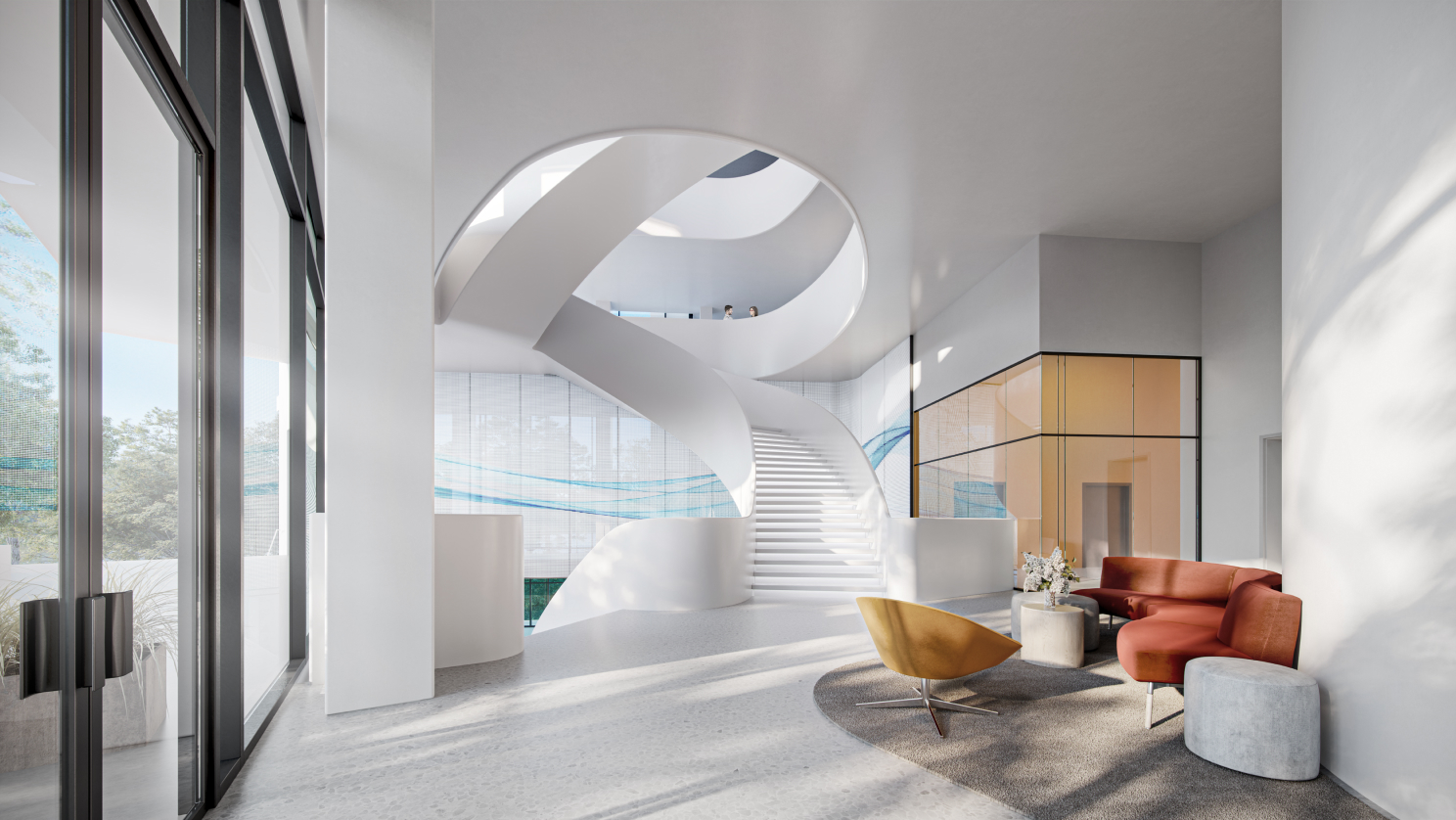
Translating Identity into a Seamless User Journey
The challenge for this competition submittal was transforming an existing parking garage into a cutting-edge executive briefing center for a genetic sequencing company. The space needed to act as a physical showcase for their past and present work. I focused heavily on the "user journey" of the building, prioritizing a seamless flow between diverse environments like cafes, product displays, and co-working spaces. To tie these disparate zones together, I conceptualized and designed a massive, DNA-inspired central staircase that winds gracefully through the atrium. Just like designing a digital platform, the goal was to take an abstract brand identity and weave it into an intuitive, connective experience that naturally guides the user from one touchpoint to the next.
Computational Design & System Interoperability
A staircase of this geometric complexity couldn't be designed using traditional methods. I led the computational design strategy, utilizing Grasshopper scripts to algorithmically generate and iterate on the staircase's curving form. However, generating a complex generative model is only half the battle; it has to actually be buildable. As the BIM Lead, I managed the critical interoperability workflow, bridging the data gap between our experimental parametric scripts (Grasshopper) and our rigid production environment (Revit). That ability to manage the pipeline between a complex generative backend and a practical, stable frontend application is the exact same systems-thinking framework required when designing UX for AI-driven products.