No items found.
1370 Stewart: Computational Design Meets Luxury Highrise
Architecture
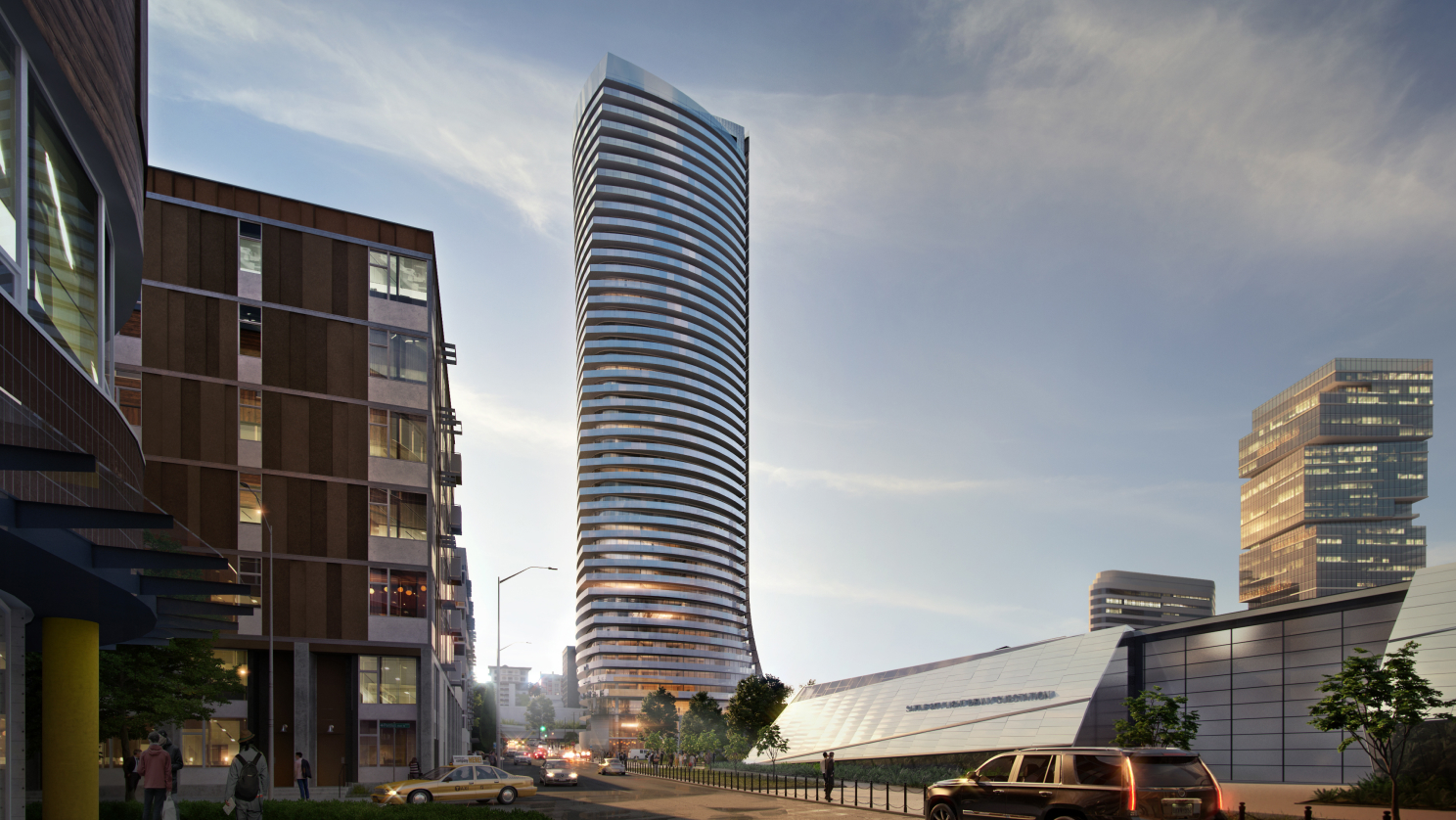
Designing for Human Outcomes
When designing a 400-foot tower on a major gateway site, you are immediately hit with heavily conflicting constraints. We had a busy, noisy highway to the East, but incredible, sweeping views of Lake Union and the Puget Sound to the North and West. My job was to take these ambiguous environmental data points and translate them into a concrete spatial logic. The unique, three-sided curving form of the tower wasn't just an aesthetic choice; it was a direct, calculated response to block out the noise while maximizing the human experience for the occupants inside. It’s the exact same mindset I use in UX today: gather the complex contextual data, and design a system that protects the user while delivering an exceptional outcome.
The Computational Workflow
Because the building's curving forms were so mathematically complex, I couldn't just manually draw them, I had to build an parametric sccript to generate them. As the computational design lead, I wrote and managed the Grasshopper scripts that drove the geometry. But an algorithm is useless if the rest of the team can't interact with it. I needed to ensure technical feasibility, so I tested and implemented a brand new software pipeline (Conveyor) to bridge our highly complex parametric models (Rhino) with our stable, production-ready environment (Revit). That ability to act as the translator between complex, automated systems and practical, usable interfaces is exactly how I approach bridging AI models with human-centered product design today.